Beyond Care · Digital Tool
The 2am thought: what if something happens tomorrow and I don't know what to do?
The Crisis Day Plan is the document you build when you're calm so you're not scrambling when everything falls apart. Hospital calls, falls, family emergencies: every decision pre-made. One-time purchase, yours forever.
BEYOND CARE · DIGITAL TOOLKIT
"I froze the first time something went wrong. Now I have a plan."
A BEYOND CARE TOOLKIT
The Crisis
Day Plan
Every worst-day decision,
made before you need it.
BEYONDCARECO.COM
33-page fillable PDF · works on any device
A peek inside
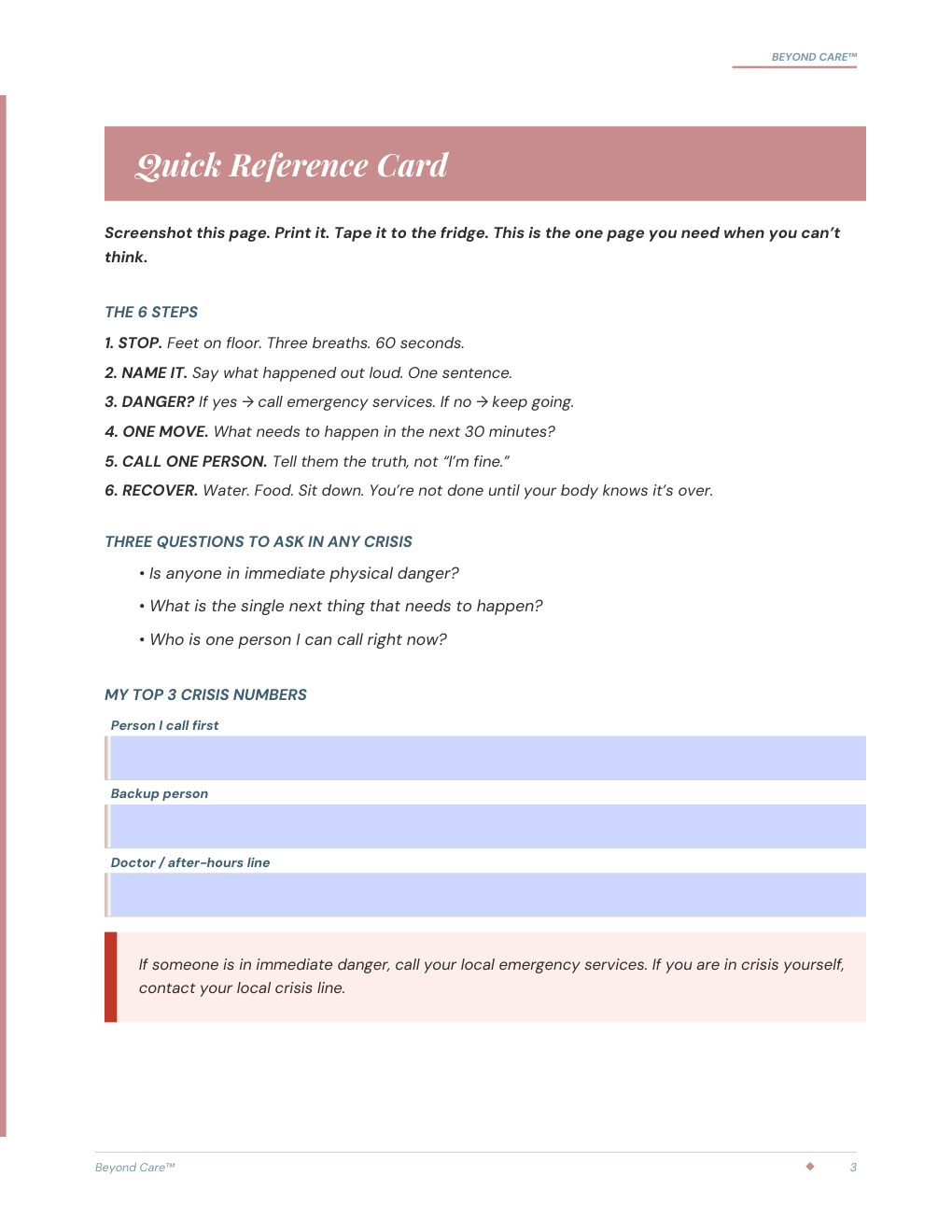
A quick-reference card you can screenshot to your phone. After-crisis recovery in 1 hour, 24 hours, 1 week. Step-by-step protocols for the 8 scenarios that send caregivers into freefall.
Built once when you're calm. Used the day you can't think.
The fall you haven't prepared for. The hospital call you hope never comes. The family emergency where everyone looks at you and you freeze.
Caregivers don't usually plan for crisis. Not because they don't think about it, but because thinking about it is too overwhelming. This tool takes the thinking out of it.
Bonus, included free
The single page you screenshot to your phone. Every emergency number, every escalation order, every "what do I do first" answer at a glance. Built for the moment your hands are shaking.
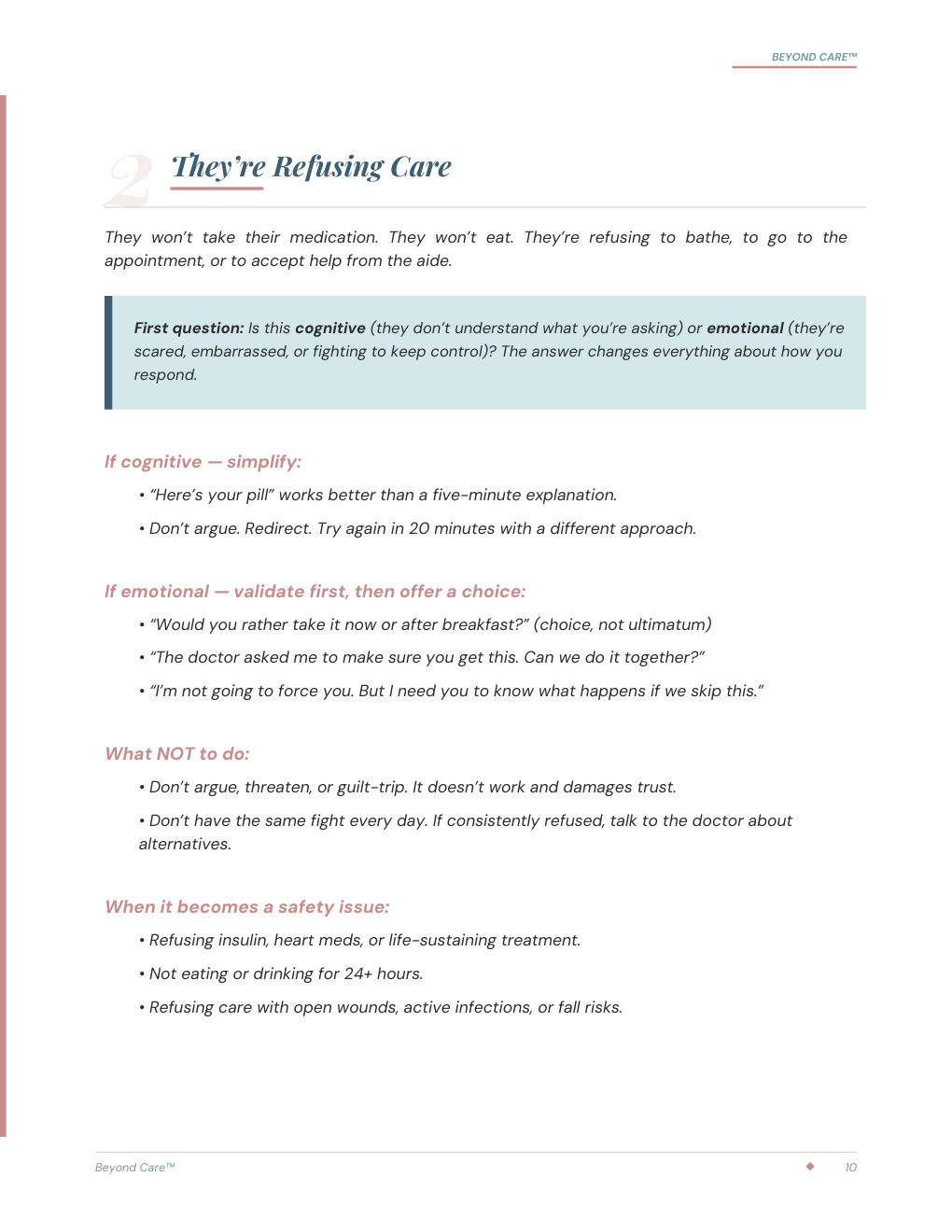
Step-by-step protocols for the scenarios that send caregivers into freefall: They Fell, They're Refusing Care, and six more. What to do first, what to say, what NOT to do, what to do next.
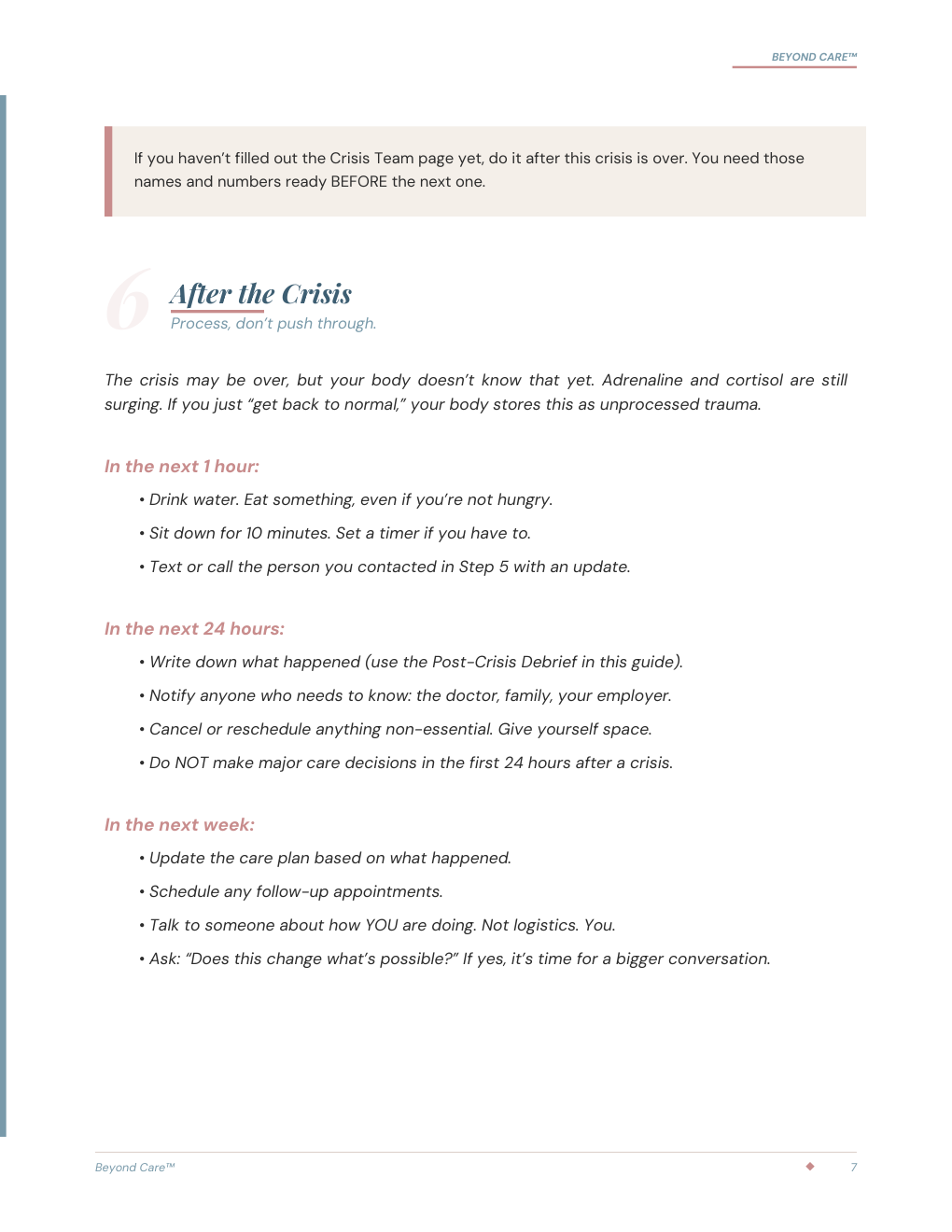
What to do in the first hour, the first 24 hours, the first week. Recovery isn't intuitive when you're still flooded, so this walks you through it step by step.
Their doctor, their medications, their preferences, their emergency contacts, all built into the document. So you're not filling in blanks while watching them in distress.
One-time purchase. PDF download. Use forever.
Before:
You hear about a friend's mother who fell.
You think about your own person.
You realize you don't actually know what you'd do.
You make a mental note to figure it out.
Three weeks pass.
You still haven't.
Then it's 2am and your phone is ringing.
After:
You take 30 minutes on a Sunday afternoon.
You fill in their doctor's name, the hospital you'd take them to, the neighbour you'd call.
You read the eight scenarios once.
You screenshot the Quick Reference Card to your phone.
The crisis day, when it comes, is not the day you build the plan.
It's the day you open it.
Why I built this
I'm Kylie. Master of Social Work, twelve years working with caregivers, and the granddaughter who watched my family hit crisis after crisis without a plan because nobody had given them one.
What I've watched most often is not bad decisions made under pressure. It's the moments after a call that should have been simple, where a caregiver freezes because the brain that knows what to do can't access the information at 2am with adrenaline in the way.
The Crisis Day Plan exists because the hardest part of caregiving isn't bravery. It's recall. And recall is what gives out first.
If you build it once when you're calm, you don't have to think when you can't.
About 20-30 minutes. You're not writing a novel. You're filling in contacts, making a few key decisions, and checking boxes. The hard part is already done for you. You just customize it to your situation.
It's a fillable PDF: update it anytime. A good rhythm is to review yours every few months or after a major change in your person's condition. Print a fresh copy and keep it somewhere accessible.
The opposite, often. The 2am panic is what unstructured fear does. The Plan turns the fear into a checklist. Once it's a checklist, your brain stops looping on it. The point isn't that the crisis is less likely. It's that you finally know what you'd do.
Each scenario is a structure, not a script. The Plan walks you through what to do first, what to say, what NOT to do, and gives you fillable space for your specific people, doctors, hospital, and medications. You're paying for the bones. You make it yours.
No. The Plan tells you when to call 911 (head injury, can't move a limb, on blood thinners, confused beyond baseline, and more). It's designed to make sure you call them faster, not to replace them. If you're in active crisis right now, call or text 988 (US/Canada) or your local emergency line.
Created by Kylie Goldman, MSW. Built from years of watching what happens when caregivers don't have a plan and everything hits at once.
Sneak peek · One scenario plan, in full
One scenario from the eight in the toolkit. So you can see exactly how each one is laid out before you buy.
That's one of eight. The other seven: Refusing care. Aggressive or agitated. You got the call. Everything hit at once. When YOU are the emergency. They wandered. They need the ER but won't go.
$17
Fillable digital PDF · Step-by-step crisis guide
Contacts, decisions, checklists, all on one document
One-time payment. No subscription. Yours forever.
A crisis plan works best when it's there before the crisis. Open it whenever that day comes.